Your cart
Geoff K
Both our dogs started supplements a year ago. They love the taste of these ones!
Both our dogs started supplements a year ago. They love the taste of these ones!
You already know it's not just old age. You've known for a while.
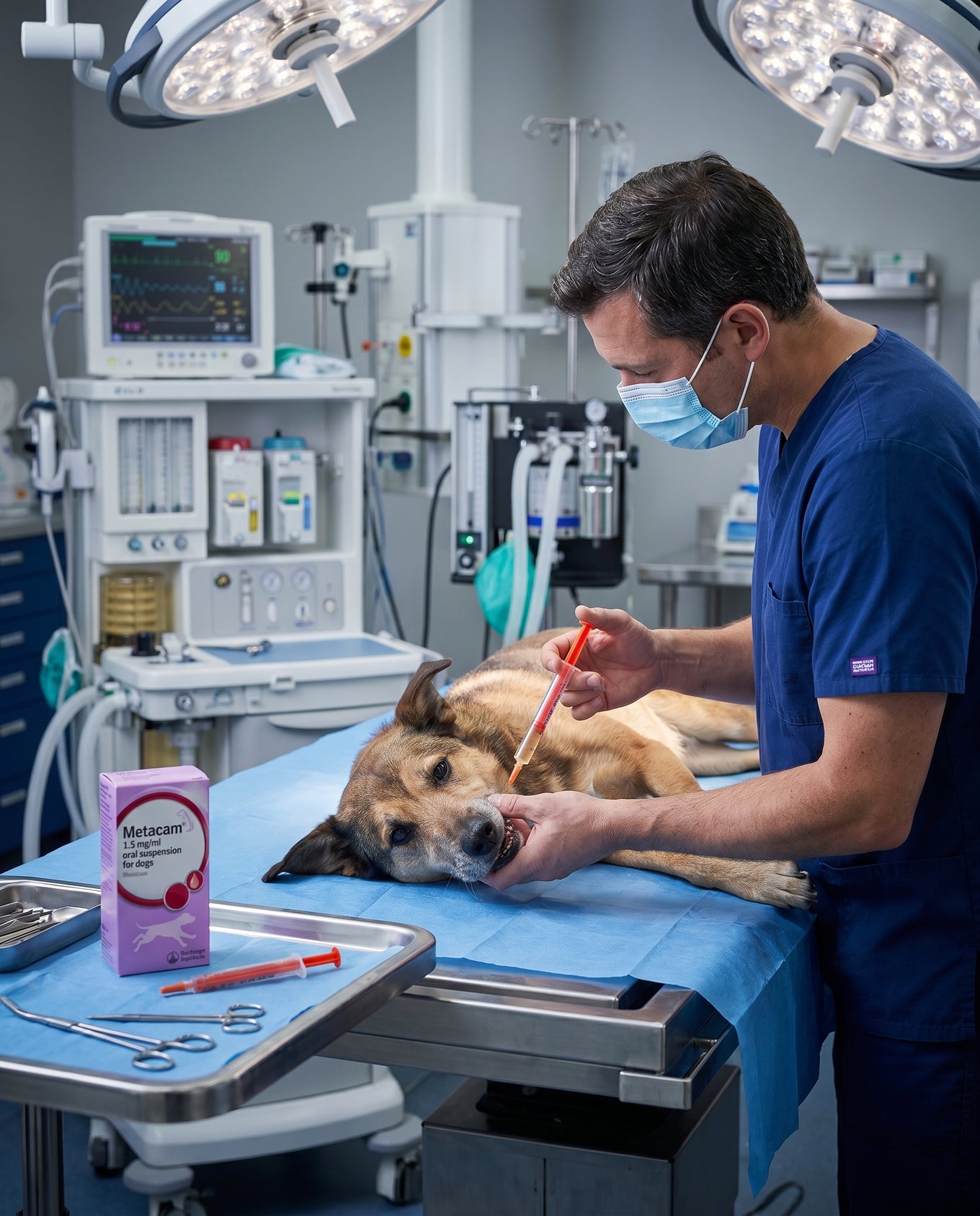
You've been to the vet. You heard the word — arthritis.
You've been giving the Metacam exactly as prescribed, and when the vet said to increase it, you did that too.
Maybe more than once.
And that's the part that sits with you on the quiet nights, isn't it? Not the diagnosis. The direction.
The dose was one thing. Now it's more.
And some instinct you can't quite silence keeps asking: if the medication is working, why does he keep needing more of it?
Here's the honest answer, and no one tends to say it plainly.
A rising dose usually isn't the medicine failing.
It's the medicine doing exactly what it does — masking pain — while the thing causing the pain keeps progressing underneath.
Metacam was never built to stop the decline. It's built to quiet the signal.
So as the joint keeps breaking down, there's simply more signal to quiet. More pain to cover. A higher dose to cover it.
Which means the climbing number isn't reassurance that you're managing it.
It's a quiet readout of how far the joint has travelled while it's been covered up.
And that's the trap most senior dog owners never see the walls of: every increase feels like you're keeping up.
But you're keeping up with a problem that's still winning.
So a better question starts to form: not "how do I cover more of the pain," but "what does this joint actually need that it isn't getting?"
And once you look at it properly, a healthy joint isn't doing one job. It's doing three, all at once.
Cartilage rebuilding
The smooth, protective foundation that keeps bone from grinding on bone. In an ageing joint, this is what's quietly breaking down. It's the root of the whole problem.
joint Lubrication
The fluid cushion that lets the joint glide freely. As it thins, every movement gets that little bit stiffer, drier, harder to start after rest.
inflammation control
The day-to-day relief from inflammation and pain. This is the part you can actually see — and it's the only one Metacam was ever built to address.
Now look at what that means.
Metacam handles the third. Only the third.
It quiets the pain signal — and leaves the cartilage breaking down and the lubrication thinning, completely untouched.
That's not a flaw in the medicine. It's simply what a painkiller is.
It was never designed to rebuild a foundation or restore a cushion.
So the joint keeps declining underneath, the pain keeps growing, and the dose keeps climbing to cover it.
Exactly the trap you're in.
And here's why the glucosamine tub let you down too: it does one of the other jobs, sometimes, partway.
One slice of a three-part problem. You weren't unlucky. You were under-equipped.
This is the shift that changes everything: the problem was never that you needed a stronger painkiller.
It's that the joint needs all three jobs supported at once — cartilage, lubrication, and comfort.
And almost nothing your dog has been given does more than one.
Solve one, you get what you've already had: a bit of relief, decline continuing.
Support all three together, and for the first time you're working with the joint instead of just muting its alarm.
That's the entire idea Orthopup was built around.
And the foundation piece — the cartilage job, the one nothing you've tried has properly touched — comes down to an ingredient that's been put to the test in real dogs.
The cartilage job is the hardest of the three, and the one most supplements skip.
The ingredient Orthopup is built around to handle it is called UC-II — a specific, undenatured form of type II collagen.
What makes it different is how it works.
Most joint ingredients try to cushion the joint from the outside in.
UC-II works through a mechanism researchers call oral tolerance — taken in tiny daily amounts, it helps calm the immune response that attacks the cartilage, easing the very cycle that keeps the breakdown feeding itself.
A daily ingredient that, in the studies, helped dogs move better on a level that stood up to a prescription anti-inflammatory — without the side-effect profile that has you blood-testing and second-guessing.
That's the cartilage job covered. Then Orthopup surrounds it with the other two.
Joint support isn't one-size-fits-all. The right daily amount depends on your dog's size. Answer two quick questions to see the right Orthopup routine for your dog:
How much does your dog weigh?
Is your senior dog slowing down despite being on Metacam?
Select your dog's weight above first